

Introduction
Construction planning starts long before work begins on site. Plans move across drawings, specs, and bid sheets. Small gaps hide inside those documents. Those gaps later turn into delays, rework, and disputes.
A scope gap appears when work has no clear owner. Teams assume someone else will handle that task. Costs rise once that mistake shows up on site. Schedules slip. Stress builds. Everyone starts searching for answers too late.
AI now checks the scope before work begins. It scans documents, links details, and flags missing responsibility. Clear scope decisions early can help reduce rework, delays, and costly misunderstandings later. Sometimes it prevents conflict before it even forms.
Work Smarter, Not Harder
iFieldSmart empowers your team with AI-driven efficiency to simplify scheduling, boost collaboration, and keep projects on track.
Schedule a MeetingUnderstanding the construction scope gap
A construction scope gap occurs when a required task has no clearly defined owner or when responsibility between trades is unclear. Work exists, yet no trade owns it. Plans mention tasks but fail to assign them clearly. That uncertainty can create confusion during estimating, bidding, and trade coordination.
These gaps often start during planning. Specs feel incomplete. Drawings carry hidden notes. Trades exclude tasks to protect margins. Boundaries blur between disciplines. No one wants to be surprised at work later.
A simple case explains the issue well. HVAC equipment requires electrical connections, but the drawings or scope documents may not clearly identify which trade is responsible for providing and connecting them. The electrical contractor may assume the HVAC contractor includes the connection, while the HVAC contractor may assume the electrical contractor owns it. The gap only shows once installation starts.
Another example shows the same pattern. Exterior panel systems may require sealants or related finishing work, yet the responsibility can be unclear between the siding, waterproofing, and finishing trades. Siding crews expect painters to do it. That small gap leads to rework and tension on the site. These situations feel minor early on. They grow expensive during execution.
Why scope gaps stay hidden before construction
Preconstruction work moves quickly and across many teams. Documents sit in emails, shared drives, and software systems. Estimators and preconstruction teams often review hundreds of sheets under tight deadlines. Under those conditions, small but important details can be overlooked during manual review.
Manual checks demand focus and patience. Fatigue increases oversight risk. Important notes hide in callouts and footnotes. One missed line later becomes a change of order.
Scope data also sits across multiple sources. Drawings, specs, schedules, and addenda rarely align fully. Trade boundaries blur between them. That is where most scope gaps begin.
Construction scope gap detection
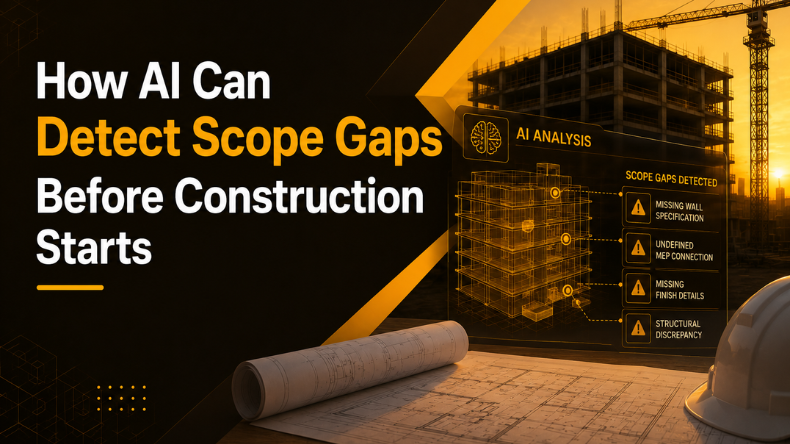
AI can analyze large drawing sets consistently and identify scope-related information across multiple sheets. It can review information across drawings, notes, callouts, specifications, and other project documents. Hidden details surface during early analysis.
Platforms such as iFieldSmart can help teams analyze drawing sets and organize scope-related information for review. The system extracts notes buried in callouts and details. Scope-related notes can be organized by trade or scope category, helping teams identify potential ownership gaps. Teams receive a clear scope sheet for review and discussion.
AI can help identify inconsistencies or potential conflicts across project documents. For example, one sheet may describe a requirement differently from another detail or specification. AI-assisted review can flag these inconsistencies for further investigation.
It also organizes information into trade-ready scope files. These files support bids, planning meetings, and coordination reviews. Teams gain clarity before contracts are signed. Early detection matters more than late fixes. When gaps surface before the project award, planning stays steady and focused. Rework risk drops before work begins.
How AI reviews drawings and scope
AI does not just scan text blocks. It studies patterns across drawings and specifications. It compares notes across disciplines and sheets.
The system identifies missing data and unclear scope. It flags mismatched dimensions and unclear instructions. Teams see risk before construction begins.
iFieldSmart AI follows a structured review path. Drawings get uploaded into the system. AI scans each page for scope clues. It assigns work items to the proper trades. Teams download a clear scope file once the scan ends.
That workflow removes guesswork from early planning. It reduces manual review effort and the risk of missed responsibilities. The process feels faster and more structured.
AI scope analysis in construction
AI scope analysis in construction links design, intent, and execution planning. It aligns drawings, specs and trade roles. That alignment builds a clearer view of project expectations.
Systems scan text, lines, and references across drawings. They detect unclear specifications and constructability concerns early. Teams address issues before construction starts.
AI-assisted workflows can also help teams organize project requirements and identify items that may require further review against applicable codes and project standards. It compares submittals against project requirements. Review cycles shorten. Errors reduce. Coordination improves across stakeholders.
iFieldSmart combines AI findings with expert review. That mix strengthens reliability. Teams trust outputs before moving toward execution. Decisions feel more grounded.
Impact on cost and schedule
Scope gaps hit budgets harder than expected. Someone must pay for missed work later. Late discovery increases labor and material costs.
Projects also lose time and coordination strength. Change orders disrupt schedules and contractor relationships. Productivity drops when teams rush to fix an unclear scope.
AI helps reduce these risks during early planning. Clear scope leads to consistent bids from trades. Coordination improves before field work begins.
Clear scope helps prevent the common misunderstandings that result in RFIs, change orders, and disputes in implementation. Teams focus on building rather than fixing misunderstandings.
Role of iFieldSmart in early scope clarity
The platform focuses on improving scope clarity before execution begins. Its AI captures notes across entire drawing sets. Nothing stays buried inside complex documents.
The system organizes the scope of trade by trade. Scope information can be organized into structured, trade-specific scope sheets for review.
The system can help identify potential scope gaps and unclear responsibilities before project award, allowing teams to resolve them earlier. It identifies unclear scope and conflicts before award. Project leaders gain stronger control over planning outcomes.
Clarity shifts project momentum. Teams enter construction with a shared understanding. That confidence supports smoother coordination across disciplines.
From manual review to AI-driven planning
Traditional scope review depends on human memory and effort. Time pressure weakens focus during manual checks. Details slip through despite best intentions. AI shifts that burden away from teams. It works across thousands of drawing elements quickly. Consistency improves across multiple projects and teams.
Teams can also use findings from previous projects to refine their review processes and focus attention on recurring scope risks. AI learns common gaps and risk areas over time. Future projects benefit from earlier lessons.
Planning begins to feel more predictable. Teams rely less on guesswork. Processes stay structured and repeatable.
The human role still matters
AI does not replace construction experience. Experts still review the scope of outputs and make final calls. Judgment remains critical during complex decisions.
AI supports teams rather than directing them. It highlights areas that need attention and discussion. Humans confirm and refine responsibilities.
That partnership feels practical. Technology handles scale and speed. People handle context and decision nuances. Both sides strengthen the outcome.
Looking ahead
It is easier to resolve scope gaps when identified prior to construction as opposed to during construction. AI assists teams in processing information about projects, identifying possible gaps in ownership, and surfacing unclear responsibilities sooner.
The objective is not to replace experienced contractors. Instead, its purpose is to provide additional information for estimators and project managers before making decisions. By combining AI and human analysis, the construction process can start with more realistic expectations and defined responsibilities.