

Construction risk in 2026 feels different. It sits closer to the work. It shows up early. Crews feel it during morning walks and late afternoon check-ins. Cost pressure builds from small slips. Schedule stress grows from quiet delays. Nothing explodes at once. It stacks. That stacking causes most losses today.
Real-time field data changes how that stack forms. It catches issues while they are still light. It brings clarity before stories drift. Risk feels less abstract and more grounded in what just happened on site.
Why old risk methods no longer hold
- Risk plans once lived far from the field. They sat in binders and folders. Updates came late. Often days late. By then, the job had already moved on.
- Field teams relied on memory. Notes got written after shifts. Photos came when someone remembered. That delay softened details. Soft details lead to hard disputes.
- In 2026, that gap hurts more. Jobs move faster. Crews expect quick answers. Old habits struggle to keep up with that pace.
Real-time field data enters daily work
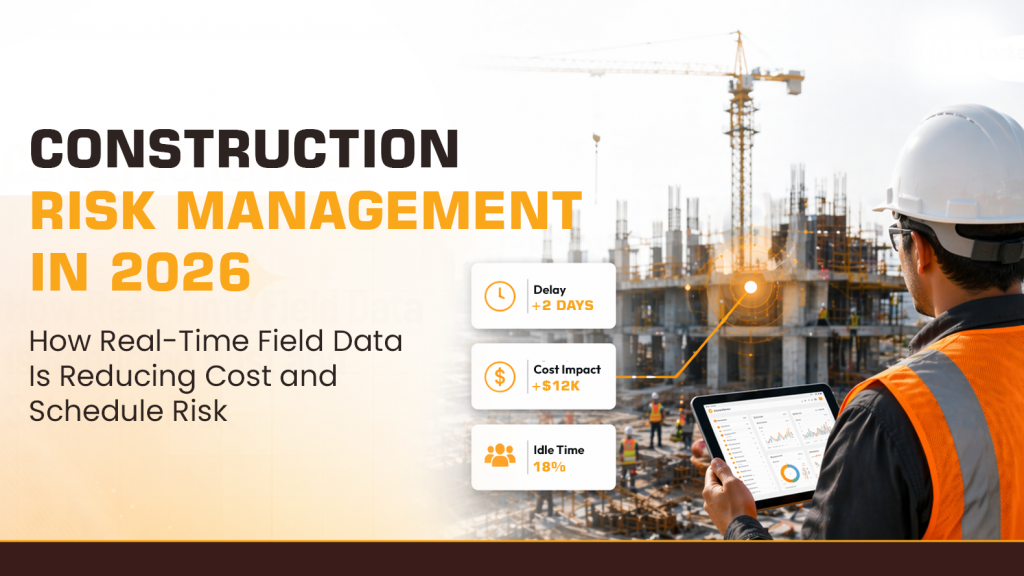
- Phones and tablets now travel the site. Data moves with crews. Logs get filled as work happens. Photos capture reality without polish. Notes tie to exact spots. Time stamps settle many questions early.
- This flow feels natural. Crews talk. They snap a photo. They add a line. No long forms. No end-of-day rush.
- Risk drops when facts show up early. Guesswork fades. Problems lose time to grow.
Cost risk starts with small misses
- Most cost trouble begins quietly. A wrong installation. A missed note. A crew follows an old plan. None feels huge at first.
- Real-time data spots those moments. A photo flags the error. A note links to the right drawing. The fix happens that day.
- That timing matters. Rework stays small. Waste stays low. Labor hours stay closer to plan. Cost control improves through speed, not force.
Schedule risk feeds on silence
- Schedules rarely break from one big delay. They bend from many small ones. Missed tasks hide in busy days.
- Live field updates break that silence. Daily logs show real progress. Photos confirm what moved and what did not.
- When delays appear early, options exist. Teams resequence work. Crews shift focus. Small changes protect the bigger plan.
Disputes lose fuel with shared facts
- Disputes grow in fog. Memory blurs. Stories shift. Dates lose shape.
- Real-time records clear that fog. Photos pair with notes and time stamps. Everyone sees the same truth.
- Many disputes stop before they form. Questions get answered quickly. Trust grows through shared facts. When claims do arise, data speaks clearly.
Risk teams move closer to the field
- Risk once lived with office teams. Field crews felt removed from it. That wall no longer stands.
- Field tools pull crews into risk control. Logging feels quick and simple. Sharing feels normal. Supervisors spot trends early. Repeat issues stand out.
- Risk becomes part of work. Not a task after work.
Owners see projects more clearly
- Owners once relied on polished reports. Those reports came late. Problems often hid behind neat slides.
- Real-time field data changes that view. Owners see real progress through photos and logs. The story feels honest.
- That clarity builds trust. Decisions come faster. Course changes feel grounded. Owner-driven risk drops as surprises fade.
Data keeps teams accountable
- Real-time data removes excuses. Work either happened or it did not. Photos show it plainly.
- This honesty shifts behavior. Crews plan tighter. Managers follow through. Not from fear but from visibility.
- Small habits change. Over time, those habits lower risk.
Risk tools feel more human now
- Tools alone do not fix risk. People still decide. Judgment still matters.
- Live data supports those decisions. It backs instinct with proof. It sparks better talks.
- Sometimes there is concern about overload. That depends on ease. When tools feel simple, teams use them. When logging fits the flow, risk drops quietly.
Weather and site chaos meet clear records
- The weather still disrupts work. Ground shifts. Access changes. No tool stops that.
- Real-time notes track impact. Photos show conditions. Logs mark delays.
- The schedule talks feel fairer. Cost talks feel grounded. Blame fades. Clarity rises. Chaos stays, but its cost shrinks.
Safety links closely linked to cost and time
- Safety risk often leads to cost risk. An injury stops work. Reviews slow progress.
- Live safety logs catch near misses early. Photos flag hazards. Fixes happen before harm.
- Safer sites move smoothly. That link feels obvious yet easy to forget. Real-time data keeps it visible.
Real-time data changes how teams think
Real-time field data does more than track work. It shifts the mindset on-site. Crews stop waiting for end of day reports. Issues feel immediate and real. A missed detail shows up right away. A delay feels visible, not hidden. That visibility nudges people to speak sooner. Small concerns get shared before they turn heavy. Conversations feel shorter and more honest.
Work Smarter, Not Harder
iFieldSmart empowers your team with AI-driven efficiency to simplify scheduling, boost collaboration, and keep projects on track.
Schedule a MeetingThere is less guessing and less second-guessing. Teams rely less on memory and more on what they can see. That shift sounds simple, but it runs deep. When facts stay fresh, blame fades. When blame fades, focus returns to the work. Risk stops feeling like a threat hanging overhead. It feels like something manageable. Something that can be handled today. That daily control builds quiet confidence across the job.
Looking ahead through 2026
Risk management keeps shifting. Speed drives that shift. Expectations stay high. Real-time field data now feels essential. Projects without it feel exposed. Not careless. Just blind. Costs stay steadier with fast feedback. Schedules bend without breaking. Disputes lose power. Risk never leaves construction. But in 2026, it feels manageable. Less like a storm. More like weather.