

Construction never moves in a straight line. One trade finishes late. Another starts early. A third works around both. Progress spreads across floors, zones, and scopes. Tracking all that with notes and photos gets messy fast. Something always slips through.
Most teams rely on updates that feel partial. A few photos. A short report. A quick call from the site. It helps, but not enough. Gaps stay hidden. Small delays grow. Questions pile up.
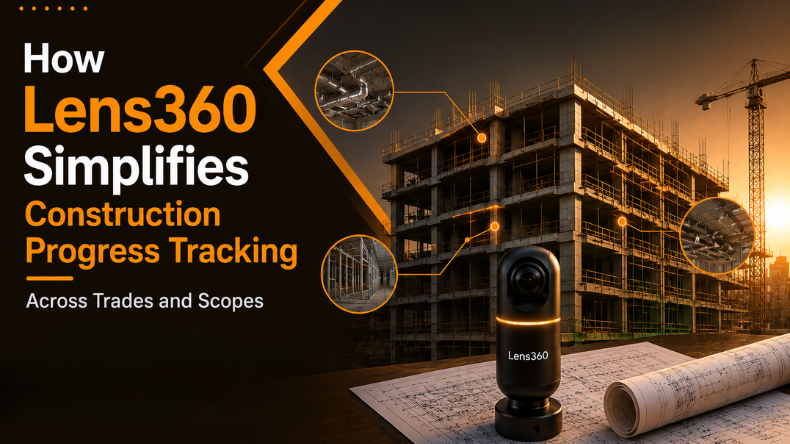
That is where Lens360 changes the feel of progress tracking.
Work Smarter, Not Harder
iFieldSmart empowers your team with AI-driven efficiency to simplify scheduling, boost collaboration, and keep projects on track.
Schedule a MeetingWhy trade level tracking often falls apart
The clarity is essential for general contractors dealing with different trades, scope, and schedules. Every trade moves at its own pace. Electricians move room by room. Drywall crews think in sections. Plumbing follows risers and shafts. When progress gets tracked in broad strokes, details vanish.
A report may say level three is done. But which rooms are done? Which walls are closed? Which scopes still lag? That is harder to see.
People fill the gaps with guesses. Sometimes those guesses cost days.
Seeing work as it actually happens
The system does more than capture visuals. Those site walks become structured, trackable progress by trade and scope, supported by consistent documentation. Progress is not just seen, it is reviewed, verified, and shared with confidence across the team.
Each walk ties back to time and place. That matters. Progress stops being a feeling. It becomes visible.
A quick look shows which trade touched which area. It shows what has not happened yet. That clarity changes daily decisions.
Tracking progress by trade, not just by date
Dates alone never tell the full story. One trade may finish rough work while another still waits. The 360 documentation helps teams to track and verify progress by trade and scope.
Compare verified site walks over time to confirm progress and completion. See how far electrical ran. Check where framing paused. Confirm if the finishes have started.
No long meetings needed. The site answers the question.
Following scopes across zones and floors
Large jobs spread fast. Multiple floors run at once. Each floor holds many scopes. It keeps that complexity readable.
Teams can jump from zone to zone. One click moves from core areas to tenant spaces. Another shows stairwells or service rooms.
Progress stays organized even when the site feels chaotic.
Reducing back and forth with clear proof
Many delays start with one line. That was done. No, it was not. The debate wastes time.
The tool removes that loop. Visual records show what stood there on a given day. No arguing. No long threads. Just proof.
That helps trades trust each other more. It also helps leaders step in early when work stalls.
Making coordination less stressful
Coordination meetings often feel rushed. Everyone talks. Few listen. The platform changes the tone.
Teams review the walk before the meeting. They arrive informed. Questions get sharper. Decisions land faster.
Less time explaining. More time solving.
Catching gaps before they grow
Small gaps hide in plain sight. A missing sleeve. An open wall. A skipped penetration. They seem minor until they start.
360 documentation helps to spot those gaps early. A quick scan shows what looks off. That early view saves rework later.
It feels like walking the site without the drive.
Helping project leads stay connected
Project leads cannot be everywhere. Traffic alone eats hours. The 360 site capture gives them a steady view without leaving the desk.
They check progress during breaks. Between calls. Late at night, if needed. The site stays close even when far away. This history becomes a trackable record of progress by trade and scope, not just a collection of images.
That steady connection helps planning feel grounded.
Keeping a clear record over time
Progress tracking is not just about today. It is also about memory. Months later, someone will ask what happened and when.
It keeps a clean visual trail. Each walk stacks over time. The record stays easy to search and review.
That helps with closeout. It also helps when questions surface long after work is finished.
Supporting fair billing and reviews
Trade billing often depends on progress claims. Those claims can feel vague. 360 visuals adds clarity.
Visual proof supports pay apps. It also supports reviews and audits. Everyone sees the same thing.
That shared view reduces friction and speeds approvals.
For general contractors, this turns progress claims into verifiable, trade-level proof that supports pay applications, approvals, and audits. Reviews move faster when progress is documented, not debated.
Helping new team members catch up fast
Projects change people often. New leads join mid-stream. They need context fast.
360 visuals gives them a way to catch up without long briefings. A few walks show how the site evolved.
They learn the job by seeing it.
Progress tracking that feels human
Construction work is physical. Dusty. Loud. Messy. Visual documentation respects that reality. It does not drown teams in charts.
It shows the work as it looks. Pipes. Wires. Walls. Scaffolds. Real things.
That makes progress tracking feel natural instead of forced.
Fewer assumptions, better outcomes
Most issues start with assumptions. Someone thought work was done. Someone else thought it could wait.
The site documentation replaces assumptions with sight. That simple shift changes outcomes.
Decisions rest on what is visible, not what is guessed.
A calmer way to manage complex jobs
Complex jobs bring stress. Too many trades. Too many scopes. Too many moving parts.
It brings a bit of calm. It organizes what feels scattered. It shows progress clearly.
That clarity helps teams breathe and move forward with confidence.
When progress feels real, people work better
There is a quiet shift when progress feels real. Not reported. Not explained. Just seen. Trades tend to slow down less. Questions sound calmer. Fingers pointless.
iFieldSmart’s Lens360 supports that shift in subtle ways. People stop guessing what others did yesterday. They check. They look. They move on. That saves mental energy more than expected.
Site teams feel less pressure to defend their work. Office teams feel less pressure to chase updates. Everyone shares the same view. That shared view builds trust over time.
It also changes how problems surface. Issues show up early, not after the finishes go in. Someone notices a missed area during a walk. A note gets shared. Work adjusts the next day.
Nothing dramatic. Just steady improvement.
That steady rhythm matters on long jobs. When progress feels visible and fair, people stay focused. Work flows better. And the project feels a little lighter to carry.
Closing thought
Tracking construction progress should not feel like detective work. It should feel simple and honest.
iFieldSmart’s Lens360 visual documentation offers that simplicity. It shows progress across trades and scopes without noise. It keeps teams aligned even when the site moves fast.
Sometimes seeing the work is all it takes.