

Quality on a job site feels simple on paper. There is a checklist, a walk, a few photos, and maybe a report at the end. But real sites are loud, rushed, and full of moving pieces. In that chaos, small gaps in quality checks slip through. These tiny gaps eventually become flaws, disagreements, and hard evenings with inspectors and owners. To keep that chaos under control, Lens360 relies on expert evaluation in addition to 360-degree photography.
Let us walk through five mistakes that show up again and again with general contractors. We will see how a visual QA platform based on 360-degree photos highlights those problems before they affect the schedule or the budget.
Mistake 1: Treating QA as just an ordinary process
A lot of teams still treat QA as one more step near closeout. Someone walks the site, marks a few issues, snaps some phone photos, and moves on. On paper, the form looks fine. On-site, problems sit buried behind drywall or under concrete. The mindset stays reactive. Fix it when someone shouts.
Work Smarter, Not Harder
iFieldSmart empowers your team with AI-driven efficiency to simplify scheduling, boost collaboration, and keep projects on track.
Schedule a MeetingThe Lens360 use case calls this out very clearly. QA & QC for a GC is not just ticking boxes. It is tied to reputation and trust with owners and inspectors. When checks happen late, defects show up after the finishes go in. Then rework, delays, and disputes feel almost normal.
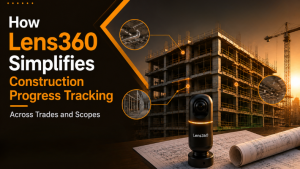
Here is where 360-degree imaging changes the rhythm. With 360 documentation, the site gets scanned on a regular cadence with a 360 camera and every capture lands on the floor plan. QA happens in layers across the build, not just once at the end. You can scroll back in time for each room and see what the slab, rough-in, and finishes looked like at each stage. That steady visual history pushes the culture away from last-minute fixes and toward early checks.
Mistake 2: Using inconsistent data
Walk multiple jobs, and the same pattern is observed. A superintendent walks with paper notes. Someone else snaps a few close-up shots. Later, nobody remembers where that photo came from or what wall that scribble refers to. Reports clash. Field teams and office teams argue over which version is right. The system lists this as a core pain. Fragmented site walks, inconsistent photos, and no central system for inspection observations.
That mess hurts in two ways. First, defects slip by because nobody has the whole picture. Second, even when someone spots a problem, it takes time to find context. Where is this in the building? Which trade owns it? Has anyone fixed it?
The platform shifts QA to a complete visual record of site conditions. Crews capture the space with 360-degree photos. The platform pins each spot on the floor plan. Field experts then review those images and flag issues with clear descriptions. Instead of a folder of random photos, the GC has a map you can click through room by room.
Reports come out of the same source. The system groups issues by location or trade, adds annotated 360 imagery, and shares everything through links or PDF files. Now, QA is not a pile of notes. It is an organised visual story that anyone on the team can follow.
Mistake 3: Letting defects hide until after the cover-up
Another common trap is weak pre-pour and pre-cover checks. Crews rush to place slab, hang drywall, or close ceilings. QA walks may happen, but they lean on memory and a few quick photos. The real risk shows up later when someone finds a missing sleeve, a bad layout, or a code miss after the space is closed. The Lens360 use case names missed defects found after finishing as one of the main risks of incomplete QA.
Once the surface closes, every fix costs more. You break finished work, reschedule trades, and push back inspections. Rework becomes part of the schedule instead of the exception.
With 360 visuals, those early stages get more attention. The platform lists pre-pour and pre-cover inspections as key use cases. Teams scan slabs, in-wall work, and above-ceiling spaces before they vanish. Field experts review those captures against drawings and models and then record any deviation, safety hazard, or installation defect as an observation with full context.
Later, if a question comes up, you can roll back to that date on the floor plan and inspect the 360 image. Did the rebar match the design? Was the conduit where it should be? That early visual check drops the odds that a bad install sneaks past the cover-up. It also gives your team proof that the work matched the specs at that moment in time.
Mistake 4: Losing control of trade coordination and ownership
A lot of QA pain comes from gaps between trades. Pipe routes clash with duct runs. Cable trays block access. A fix for one scope quietly blocks another. When QA and field reports live in silos, those cross-trade conflicts are hard to spot. The platform calls out conflicting reports between trades, a lack of shared documentation, and no way to track observations in one place.
Without clear visual proof, arguments stay fuzzy. Each trade brings its own photos and stories. Nobody agrees on who owns the fix. The GC ends up stuck in the middle, trying to sort blame while the schedule slips.
The system tackles this in a few layers. First, field experts can log observations as trade-by-trade or cross-scoped items. That means a single issue can affect the plumbing and electrical, both of which touch the same space. Second, every issue gets mapped to a precise spot on the floor plan with linked 360 imagery. There is no guesswork about where that clash sits.
The use case also highlights multi-trade coordination checks as a standard pattern. Teams can use 360 scans to review crowded zones and look for scope overlaps before work moves ahead. When someone does flag a problem, the GC can share that observation with the right subs and the design team in a single report. That shared view helps teams talk about facts, not guesses.
Mistake 5: Skipping strong documentation for owners, inspectors, and disputes
Even when the field work looks good, weak documentation can still hurt. A walk with an inspector goes fine, but there is no solid record of what was approved. An owner questions the quality near handover, and the team has only a few photos to show. If a dispute lands on the table later, the GC stands there with no clear visual trail to defend the work. It lists this gap as a major risk. No visual record for dispute cases and quality issues that slow down handover and final sign-off.
On the other side, owners expect more now. They want to see that QA did not stop at a paper checklist. They want proof that rough-in work was checked, that safety hazards were tracked, and that finish defects were caught before the final walk.
It leans hard into that need. Every observation lives in a report with images, text, and exact location. Those reports can move out as PDF files or secure links for owners, architects, and inspectors. The system also ties into tools like Procore and Autodesk Construction Cloud, so observations and reports link back to the wider project record instead of sitting on a separate island.
Over time, this builds a rich QA history. The use case points to long-term benefits such as faster closeout with already verified install records, fewer repeat punch items due to ongoing issue tracking, and strong 360 evidence for dispute defence. That is a big shift from scrambling through old email chains when a claim shows up.
Pulling it together: QA that feels real, not just formal
When you look across these five mistakes, a pattern shows up. The problems are not only about bad work. They come from blind spots. Missed views before cover-up, scattered photos, unclear trade ownership, and thin records for owners and inspectors.
Lens360 answers that with a simple idea. Point a 360 camera at the site on a steady rhythm, pin every view to the plan, have real construction experts study the images, and log each issue with clear context and easy sharing. The tech helps, but the mix of human review and full room views is what really gives QA some teeth.
For a GC, that means fewer extended arguments in trailers, fewer surprises close to handover, and more composure when someone requests evidence. QA & QC feel like a continuous habit integrated into everyday work rather than a final step. Long after the final punch item closes, the site story remains evident thanks to a live visual record of the job.