

The Quiet Gaps That Break a Project
Projects don’t fail in one big moment. They slip through tiny cracks. A missing valve tag. A ceiling duct that doesn’t fit. A wall that hides a power line. These details start small but grow until someone pays for rework.
Owners lose money. Crews lose time. Teams lose trust.
That’s where iFieldSmart steps in — not as another app but as a connected space where every drawing, model, and field capture works together. It catches those silent project killers early, before the site feels the pain.
Work Smarter, Not Harder
iFieldSmart empowers your team with AI-driven efficiency to simplify scheduling, boost collaboration, and keep projects on track.
Schedule a MeetingWhat Constructability Really Means
Constructability isn’t a fancy word. It just asks one thing: Can this plan actually be built the way it’s drawn?
Most projects assume it can. But once work starts, design intent and site reality start to drift apart. Constructability Review System uses BIM and AI to test designs early — checking fit, sequence, and compliance before anyone sets foot on site. It’s not about perfection. It’s about confidence . Every model check and report adds a small layer of certainty.
Why Early Review Saves the Day
Waiting until the field stage to fix problems is like patching a roof during rain. It’s late, messy, and costly.
It runs early Constructability Reviews right after design freeze — scanning for clashes, scope gaps, and missing details. The result? A clean, coordinated set that teams can price, plan, and build from.
Architects refine their work. Contractors bid with clarity. Owners breathe easier.
Where Scope Gaps Hide
Scope gaps are sly. They hide between trades and documents. No one claims them, yet everyone assumes someone else will. Maybe an MEP sleeve in a wall never gets assigned. Maybe a rooftop curb belongs to both the HVAC and structural team — or neither.
The system compares sheets, models, and scopes to trace those missing bits. It doesn’t stop at pointing them out — it assigns them, tracks them, and closes the loop.
That approach means fewer RFIs, fewer surprises, and tighter budgets.
Bringing Order Through VDC
A model is like a meeting point — everyone gathers around it. But when files are scattered and updates get buried, that shared space falls apart. With Virtual Design and Construction (VDC) on, everyone — from architects to trades — works off one shared model. Clash checks, coordination, and issue logs all live in a single dashboard.
- No chasing for the “latest version.”
- No wondering who fixed what.
- The model becomes the single source of truth, linking design with the field.
Stepping Into the Field With Reality Capture
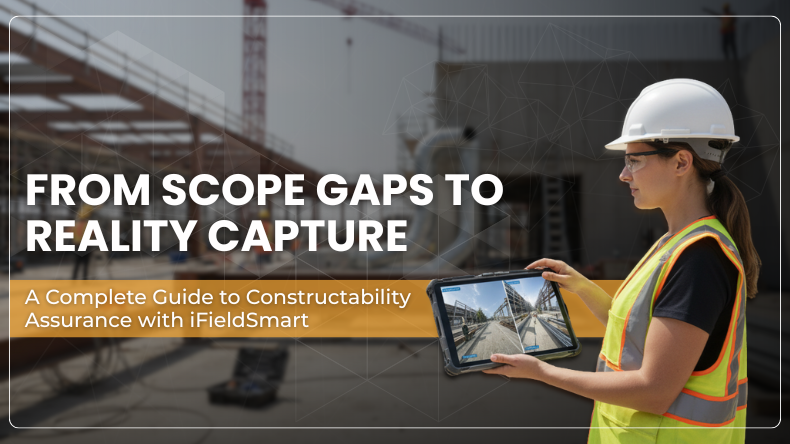
The best plan still meets dust and noise once work begins. That’s where Lens360, reality capture solution, changes the game. One quick site walk records a full 360° view of each area. Those views get pinned, compared to the model, and shared instantly. Teams spot a misaligned wall or misplaced pipe before it becomes rework. Owners can check progress remotely and get proof instead of promises. It’s simple: walk, capture, compare, fix.
From 2D Sheets to Living Proof
Reality capture does more than make nice visuals. It builds an ongoing record — proof that each step was done right. When a ceiling closes, there’s still a full photo record behind it. When a system passes inspection, that proof stays linked to the model. That’s how the platformt turns data into accountability. It protects owners and supports teams with facts, not guesswork.
Handover That Actually Makes Sense
Ask any owner what happens at handover — you’ll hear groans. Stacks of paper. PDFs with no order. Names that don’t match. The closeout process solves that. It merges all verified as-built data and capture records into a digital twin that actually works. Facility managers open it, find what they need, and keep running the space without confusion. It’s a clean finish to a complex job — a true reflection of the building, not a half-finished archive.
The Constructability Path in 5 Simple Moves
You can break down constructability assurance into five clear steps:
- Review Early – Load drawings, run AI checks, and get the big issues fixed before they multiply.
- Centralize Models – Keep one VDC hub with rules for naming, versioning, and ownership.
- Catch Scope Gaps – Run system scans to locate missing scopes and assign them quickly.
- Capture Reality– Walk the site weekly, compare with the model, and close gaps while they’re small.
- Close Cleanly – Build final records from verified data, not assumptions.
Repeat this loop and each project feels lighter, smoother, and calmer.
The Measurable Payoff
Every owner asks: what’s the gain? The answer is clear.
- Less rework.
- Fewer claims.
- Faster decisions.
- Lower costs.
Designs stay closer to buildable reality. Bids reflect real work, not safety padding. Meetings focus on action, not blame.
When facts flow freely, people trust the process — and that alone saves weeks.
Real People, Real Work
Technology only helps when it feels natural.
That’s why the system fits into daily routines instead of forcing new ones.
A site lead checks progress photos right on their phone. A designer gets live model feedback while still at their desk. A project manager sends owners a link instead of a report. Each small act removes friction.
Together, they turn chaos into rhythm.
Step Lightly, Then Scale
No one wants to overhaul an entire device overnight. Start with one project floor or trade. Test the constructability review. Try a few capture runs. See what the data shows. Once the team feels the difference — fewer surprises, cleaner tracking — scaling up is easy. The platform grows with the project, not against it.
The Shared Win
iFieldSmart isn’t just for owners. GCs track issues faster. Subs prove their work without endless photos.
Designers see how their plans perform. Each role benefits differently but speaks the same visual language — models, pins, and facts. That keeps everyone moving together instead of apart.
Closing ideas
Constructability assurance isn’t about big tech talk.
It’s about steady care — checking early, watching closely, and finishing strong.
When owners and teams share the same facts, the path from idea to handover stays clear.
It gives that clarity through smart reviews, shared models, and living proof from the field.
From scope gaps to reality capture, it’s one connected process that makes projects feel human again — real, predictable, and buildable.